
What Does “They” Mean?
Language continues to grow as people find words that better reflect who they are. One question that comes up often in counseling and everyday conversations is: what do they/them pronouns mean? Pronouns may seem like small words, yet they carry meaning tied to identity, belonging, and how someone wishes to be addressed.
At Symmetry Counseling, conversations about identity, pronouns, and self-expression often arise in individual counseling sessions. We work with ages 10 through adulthood and provide both in-person and online counseling. Discussions about pronouns are not about trends or headlines. They are about respecting how someone experiences themselves and how they want to move through the world.
What Do They/Them Pronouns Mean?
When someone uses “they/them” pronouns, it means those are the words they would like others to use when referring to them. Instead of saying “he went to the store” or “she is coming later,” you would say “they went to the store” or “they are coming later.”
“They” has long been used in the singular form in everyday language. For example, someone might say, “If anyone calls, tell them I will call back.” In this case, “them” refers to one person. In the context of gender identity, “they/them” pronouns are often used by people who identify as non-binary, genderqueer, gender fluid, or outside the traditional categories of male or female.
Non-binary identity describes someone who does not feel fully male or fully female. Some people may feel a blend of genders, while others may not identify with gender categories at all. Personal experiences vary, and no single definition fits everyone.
Conversations about identity often arise in individual counseling, where clients explore questions of self-understanding, relationships, and belonging in a safe and respectful setting.
Common Misunderstandings About They/Them Pronouns
Misconceptions can create confusion, so it helps to separate myths from facts.
One common belief is that all transgender individuals use they/them pronouns. That is not accurate. Some transgender individuals use he/him or she/her pronouns. Others use they/them. Pronouns depend on personal identity, not assumptions.
Another misunderstanding is that someone who uses they/them pronouns must pursue medical procedures or change their body. Pronouns are about language and identity. A person can be anatomically male or female and still prefer they/them pronouns. Medical decisions and pronouns are separate topics.
It is also important not to assume someone’s pronouns based on appearance. Clothing, hairstyle, or voice do not define gender identity. Respect begins with listening and asking when appropriate.
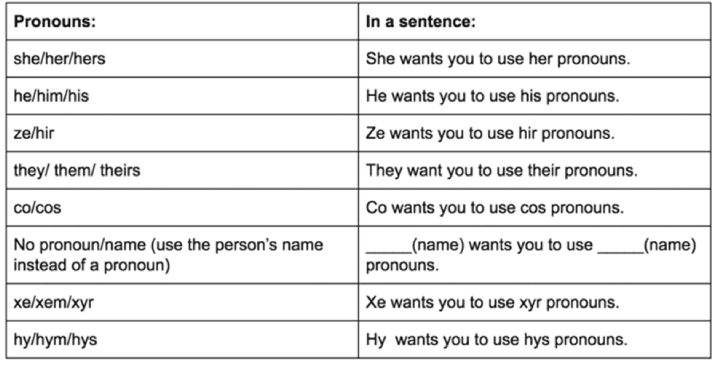
See below for a brief list of non-binary pronouns that you or others can choose to be called by.
How to Use They/Them Pronouns Respectfully
Respectful language is learned, and practice helps. If you are unsure about someone’s pronouns, asking politely can open the door to understanding. A simple question, such as “What pronouns do you use?” can go a long way.
If you make a mistake, offer a brief apology and correct yourself. Long explanations or repeated apologies can place unwanted attention on the person who was misgendered. Growth happens through awareness and repetition.
Grammar concerns sometimes make people hesitant to use “they” in the singular form. Practice helps reduce that discomfort. Try forming sentences about a specific person using “they.” For example, “They shared their thoughts in the meeting,” or “I appreciate their perspective.” Over time, this language becomes more natural.
In counseling, we often explore how communication patterns connect to emotional growth. Developing respectful language can be part of emotional maturity, which includes empathy, accountability, and openness to learning.
Being an Ally and Creating Inclusive Spaces
Being an ally means showing respect and care for people whose identities may differ from your own. Allyship does not require sharing the same identity. It involves listening, learning, and speaking up when someone is treated unfairly.
For example, if a friend uses they/them pronouns and someone repeatedly misgenders them, a polite correction can help create a welcoming environment. Small actions like introducing yourself with your own pronouns can also signal openness and respect.
It is important to avoid generalizations. Not everyone who uses they/them pronouns has experienced rejection. Not everyone who struggles with pronoun acceptance is acting out of malice. Experiences vary across families, schools, workplaces, and communities. Approaching conversations with curiosity instead of judgment creates space for growth.
Clients sometimes come to counseling feeling unheard in conversations about identity. Others may feel confused or unsure how to respond when someone in their life changes pronouns. Therapy offers room to process emotions such as discomfort, fear of saying the wrong thing, or grief connected to changing expectations. These reactions can be explored thoughtfully without labeling or blame.
When Counseling Can Help
Questions about what they/them pronouns mean can connect to topics such as self-acceptance, relationships, and family dynamics. Counseling provides a place to explore these issues without pressure.
At Symmetry Counseling, our specialists offer individual counseling sessions of 53 minutes, in person and online. Insurance-friendly options and flexible scheduling make services accessible for many families and individuals.
Identity development, communication challenges, and emotional growth can unfold over time. Guidance from a trained clinician can help you process your experiences and develop language that aligns with your values.
Moving Toward Understanding With Symmetry Counseling
Understanding what they/them pronouns mean is one step toward respectful relationships and personal growth. Language evolves, and learning new ways to speak about identity can deepen empathy across families, friendships, and communities.
Being an ally for the LGBTQIA++ community is very important. Being an ally does not mean you have to identify as part of the umbrella; it means you are just supporting those individuals. It is hard for individuals to come out and express themselves openly, and having support around them is very important.
At Symmetry Counseling, we believe respectful dialogue and thoughtful counseling can help people feel heard and valued. If questions about pronouns, identity, or relationships are weighing on you, connect with our team today.

Recent Posts
From Self-Care to Stronger Relationships: How Mental Health Shapes Love, Parenting, and Connection
Love, family, and emotional well-being are deeply connected. Yet, in many cases, people invest their time, money, and energy in life’s big moments: the wedding, the birth of a child, or even the pursuit of love. They do so without…
How to Create Meaningful Connections and Protect Your Emotional Space
At social gatherings or in everyday life, many people feel pressure to connect, communicate, and be perceived as confident. Take a minute to think about what kind of person comes to mind when you think of someone who is great…
Understanding Envy and Emotions in the Digital Age: How to Reconnect with Yourself
Envy is one of humanity’s oldest emotions, yet today it shows up in new ways. The constant connection offered by smartphones and social media makes it easy to compare ourselves to others on a daily basis. This exposure can stir…
Do You Need Help?

Not what you were looking for?