Definition of Body Image
If you are struggling with eating or body image and need support right now, the National Alliance for Eating Disorders helpline is available at 1-866-662-1235. If you are in crisis or having thoughts of harming yourself, you can contact the 988 Suicide and Crisis Lifeline any time by calling or texting 988.
Body image counseling is one of the more common reasons people reach out, and it is rarely because of a single moment. More often it is the accumulation — the same thought arriving most mornings, the same small avoidances, the sense that this takes up more room than it should.
There is a version of your morning that a passing thought can quietly take over. What you put on, whether you go to the pool with everyone else, whether you show up to the photo or step out of it, how much of your attention is spent managing how you feel about how you look instead of just living the day. None of that has to be dramatic to be real, and it can shape far more of a day than anyone around you would guess.
If some version of that sounds familiar, body image therapy is built around exactly this. It is a space to work through how you relate to your body and how you think about it, not a program aimed at changing your body itself. At Symmetry Counseling, our approach to body image counseling starts from where you actually are, without judgment about how you got there.


What body image therapy involves
Body image therapy focuses on your relationship with your body and the thoughts and feelings that shape it, rather than on your appearance or on trying to change how you look. That distinction is the whole point of this work, and it is worth stating plainly. The goal is not a different body. It is a different, steadier relationship with the one you have.
In practice, this often means becoming more aware of the thoughts that drive how you feel about your body, and gently examining where those thoughts are accurate, distorted, or simply unhelpful, without judgment about having them in the first place. Structured approaches such as cognitive behavioral therapy are commonly used here, working with the connection between thought, feeling, and behavior over time, though the specific approach depends on you and what fits your situation.
This work also tends to include understanding how these patterns developed and what keeps reinforcing them in daily life, since the goal is a lasting shift rather than a temporary reframe. The pace and direction of this work are set with you, and there is no fixed script everyone follows. Some people move through this over a matter of months; others find it useful to continue longer, particularly if body image difficulties are tied up with other concerns.
How body image difficulties show up in daily life
Body image difficulties rarely stay contained to a single moment. They tend to spread quietly into the ordinary parts of a day, in ways that can be easy to normalize because they have simply become how things are.
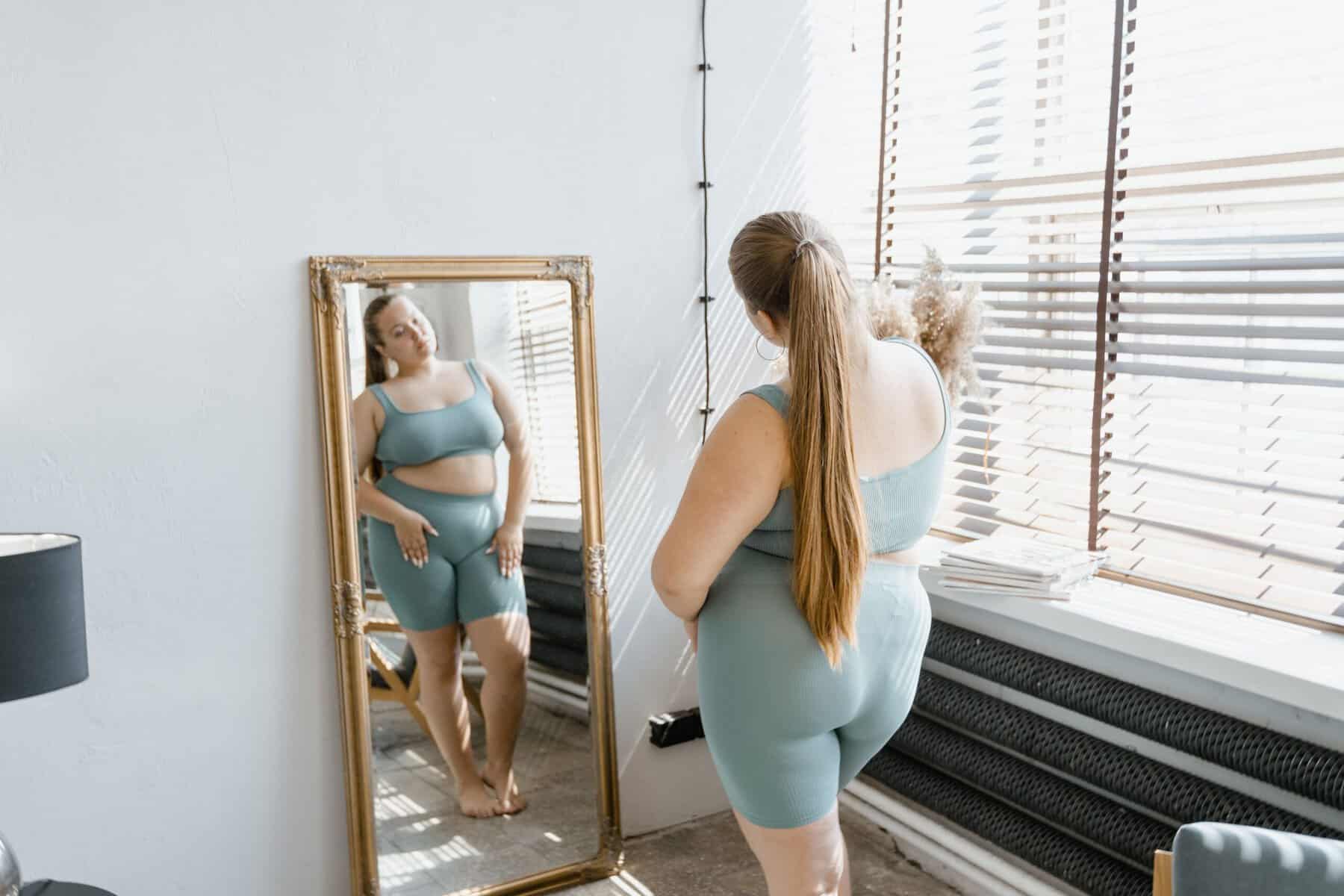
Someone might avoid being photographed, or find reasons to skip a social event rather than confront how they feel about showing up to it. Getting dressed can turn into a longer, more fraught process than it needs to be, with certain clothes or situations avoided altogether because of how they make someone feel rather than anything practical. Mirrors and reflective surfaces can become something to brace for rather than glance past.
The mental space this can take up is easy to underestimate from the outside. A significant part of someone's attention can go toward managing appearance-related worry, comparing, adjusting, second-guessing, long before anyone else would notice anything going on. That background noise can be exhausting in a way that is hard to explain to someone who has not experienced it.
It can also affect closeness with other people, including comfort with intimacy, when self-consciousness about one's body gets in the way of feeling present with someone else. Relationships can absorb some of this too, when a partner or friend cannot quite understand why something that seems small carries so much weight, and the distance that misunderstanding creates.

Where body image difficulties tend to come from
Body image difficulties usually develop gradually rather than appearing out of nowhere, and they often come from more than one direction at once. Comparison plays a large role, whether that is comparison with peers growing up, with images encountered constantly online, or with broader cultural ideas about what bodies are supposed to look like. Social media in particular has a way of making comparison feel constant and unavoidable, even when someone knows intellectually that what they are seeing is curated.
Comments made in childhood, even offhand or well-meaning ones, can settle in and shape how someone feels about their body for years afterward, long after the person who said them has forgotten saying anything at all. A remark from a parent, a teacher, or a peer can become something someone carries quietly into adulthood without fully realizing where the feeling originated.
Life changes can also shift things considerably. A body that changes through illness, pregnancy, aging, injury, or simply the passage of time can unsettle a relationship with one's body that once felt stable and unremarkable. None of these origins make the difficulty any less worth addressing, and understanding where a pattern came from is often part of loosening its grip rather than something to feel embarrassed about needing to explore.
The relationship between body image and eating
Body image and difficulties with eating are often connected, and it is worth naming that honestly rather than treating them as unrelated. Either one, on its own, is a legitimate and sufficient reason to reach out for support. You do not need both to be present, and you do not need to have a clear sense of which one came first.
If your difficulties center mainly on eating, our eating disorders page speaks to that more directly. If your experience is more about how you feel about your body day to day, this page is the closer fit, and the two areas of support are not mutually exclusive.